Forum Insight2026
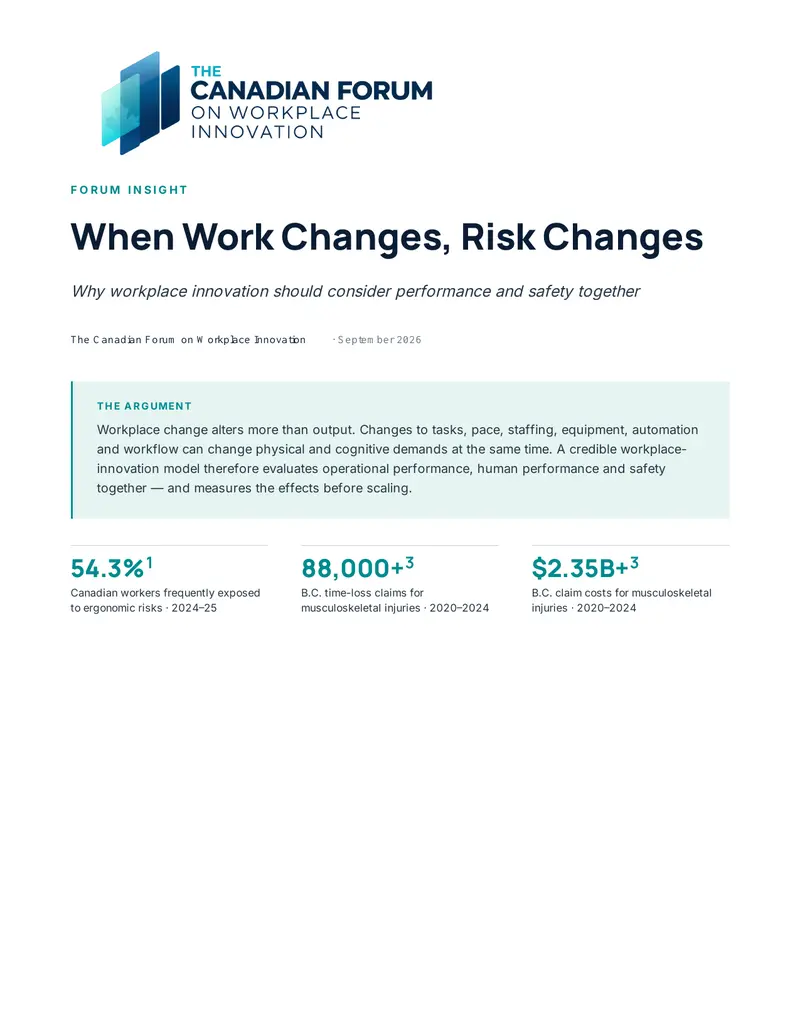
When Work Changes, Risk Changes
Why workplace innovation should consider performance and safety together
5 pages · PDF

Practical Brief
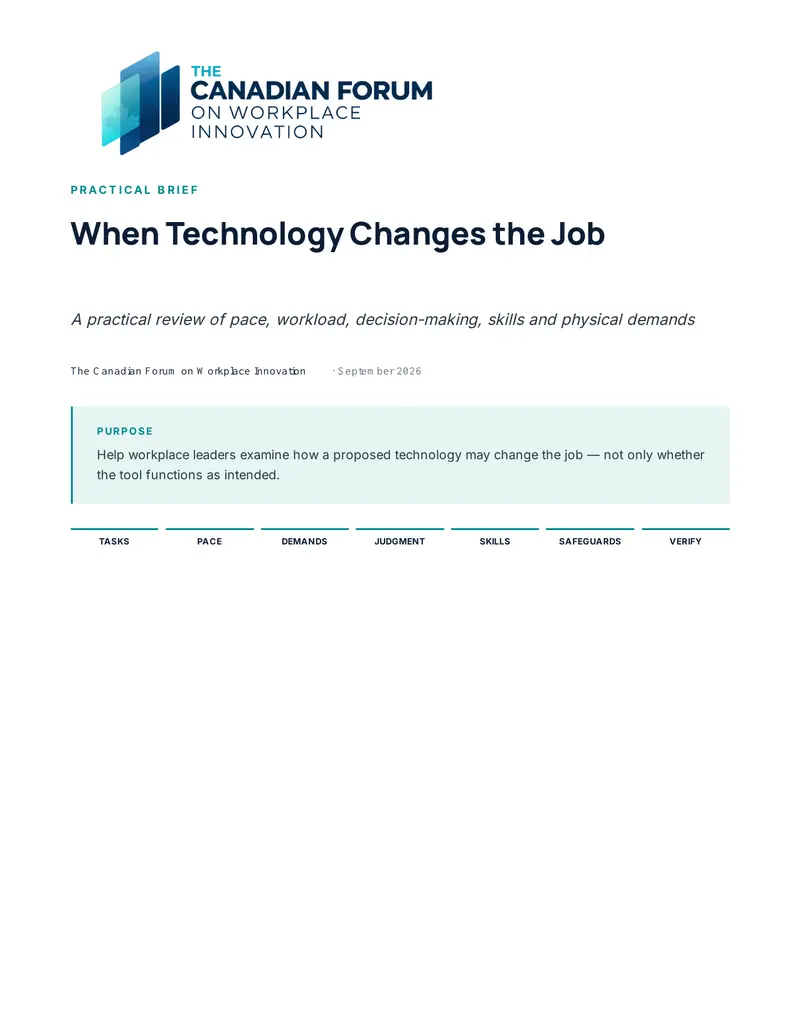
A practical review of pace, workload, decision-making, skills and physical demands
A technology can remove one task while creating new demands elsewhere. This brief helps workplace leaders examine how automation and digital systems may change tasks, pace, workload, decision authority, skills, monitoring and physical demands.
September 2026 · 6 pages · PDF
Publication overview
Summary
A technology can remove one task while creating new demands elsewhere. This brief helps workplace leaders examine how automation and digital systems may change tasks, pace, workload, decision authority, skills, monitoring and physical demands.
Technology adoption should be treated as work redesign
Key considerations
Examine how a proposed technology may change the job—not only whether the tool functions as intended.
The review should cover tasks, pace, workload, decision-making, skills and physical demands across the full range of real operating conditions.
Measure the effects of the change on the job and the people doing it before extending or scaling the technology.
Evidence and sources
Complete sources and evidence notes are provided in the publication.
Official statistical and regulatory sources are used for core factual claims where available. Survey, think-tank, consulting and international evidence is used as complementary context and is identified by source type. Descriptive associations are not presented as causal effects, and measures with different populations, definitions or reference periods are not treated as directly comparable.
Download
PDF · 6 pages · Practical Brief
Related
Why workplace innovation should consider performance and safety together
5 pages · PDF
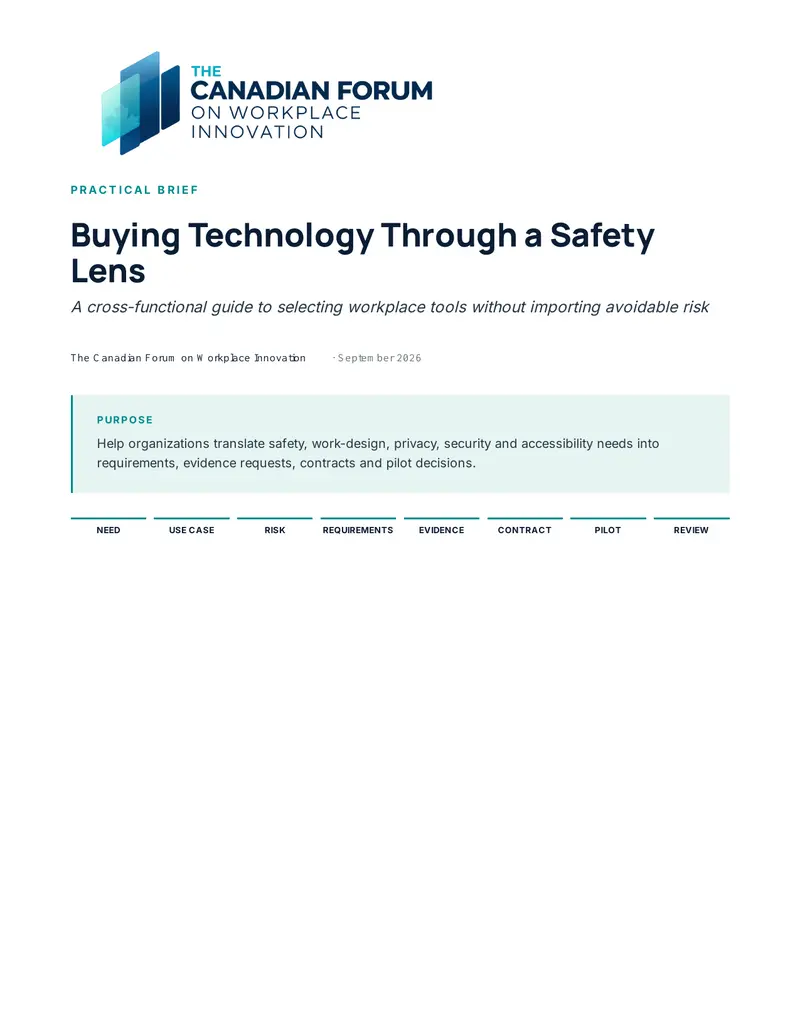
A cross-functional guide to selecting workplace tools without importing avoidable risk
6 pages · PDF
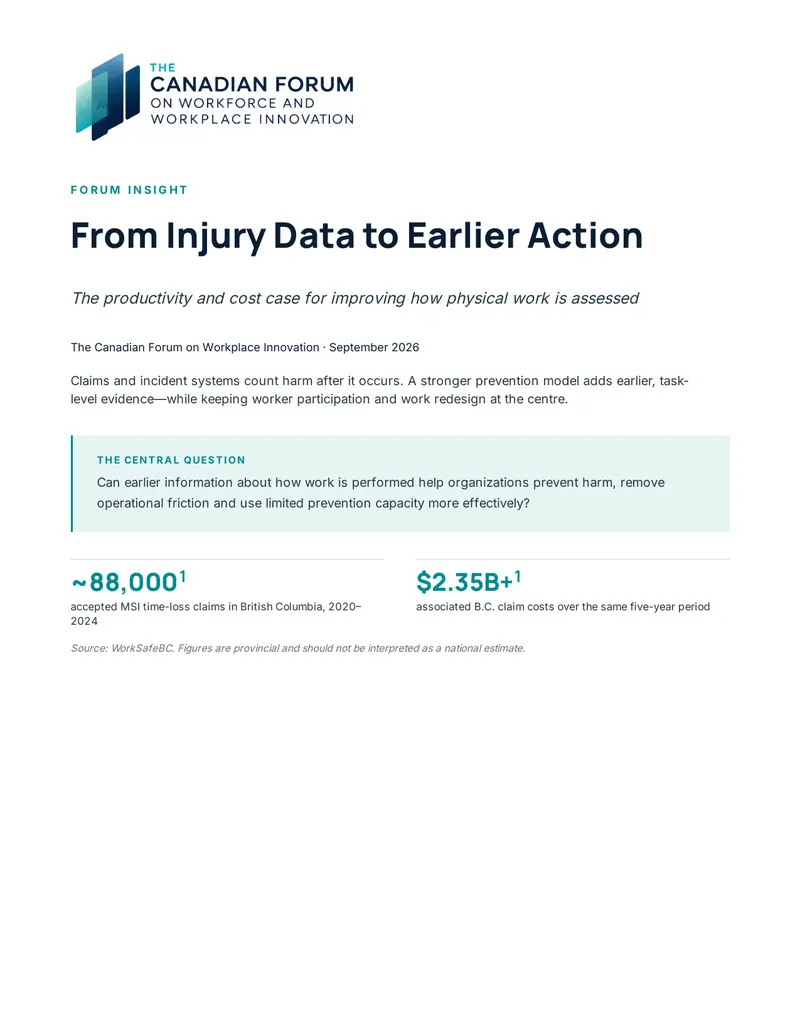
The productivity and cost case for improving how physical work is assessed
9 pages · PDF