
Applied Innovation in Practice
Using movement insight to improve how work is designed
Better evidence for safer, better-designed work
The Forum works with organizations to examine physically demanding tasks, test practical changes and document what is learned. In selected pilots, Vergo turns short task videos into structured movement information that supports workplace decisions.
A Forum-delivered workplace pilot, supported by Vergo's movement-analysis technology.
The Opportunity
Seeing more clearly how work is performed
Physically demanding work is shaped by more than posture alone. Task sequence, repetition, duration, force, equipment, pace, workspace design and production requirements can interact. Yet the information needed to examine these factors can be time-consuming to gather and difficult to translate into practical action.
A Forum-delivered pilot gives organizations a structured way to examine a representative task, review movement information alongside workplace context and identify changes worth testing.
From Observation to Action
How Vergo works
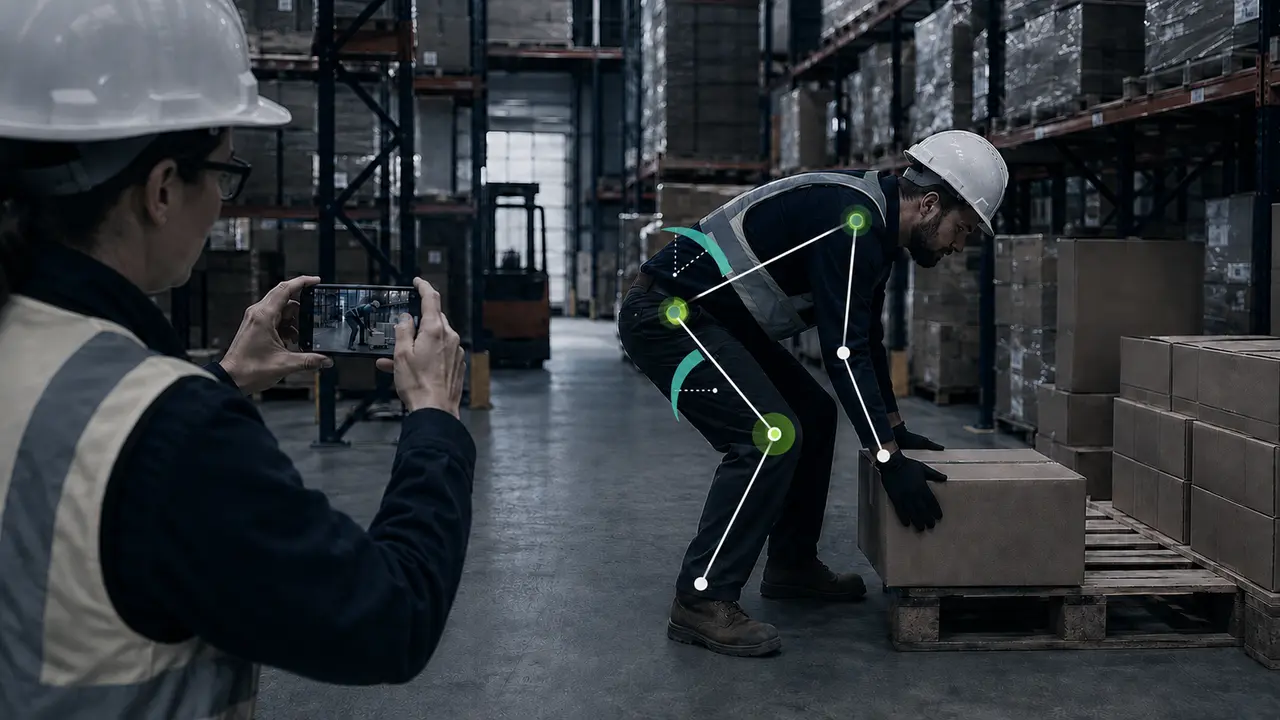
Vergo turns a representative task video into movement-level information that can support workplace decisions.
1 — Record the task
Short representative task video
A brief video captures how the task is performed in its normal work setting.
2 — Analyze movement
Posture, repetition, duration and force
Vergo identifies body position and movement information visible in the recording.
3 — Review the findings
Risk information and movement-level insight
The findings are reviewed alongside task demands, workplace knowledge and operational context.
4 — Act and document
Recommendations, reporting and follow-up
The organization can identify changes to test, document decisions and compare follow-up observations.
A Forum-delivered pilot
Technology is one part of the process.
The Forum works with the organization to define the workplace question, establish scope and evidence needs, coordinate participation, review findings in context and document what was learned. Vergo provides the movement-analysis capability used within that process.
The purpose is not simply to produce a score. It is to support a better-informed workplace decision.
Illustrative Vergo workflow. Assessment factors and outputs depend on the task, video quality and information provided.
A wider view of workplace performance
Work design and physical demand
Explore how task layout, reach, lifting, repetition, duration, equipment and workflow may contribute to physical demands.
Productivity and implementation
Consider whether changes to the task could support smoother work, reduce avoidable movement or make improvements easier to implement.
Documentation and follow-up
Provide structured information that can support assessment records, recommendations, reporting and comparison after changes are introduced.
Pilot findings support workplace review and professional judgment. They do not replace qualified occupational health, safety, ergonomics or medical advice where it is required.
The technology does not make the decision
A video can show how a task is performed, but it does not explain every factor affecting the work. Worker experience, task variability, production requirements, equipment, environment and organizational practices all matter. The Forum's role is to ensure that the technology is used within a practical process that considers this wider context.
The technology contributes
- Movement-level information
- Consistent documentation
- Visual evidence for discussion
- Support for follow-up comparison
The workplace contributes
- Knowledge of the task
- Operational context
- Worker experience
- Judgment about feasible changes
Community of Practice
From one pilot to shared workplace learning
Individual pilots can also contribute to the Forum's Community of Practice on musculoskeletal injury prevention and work design. The community creates a practical space for employers, workers, safety leaders, researchers and other partners to compare approaches, discuss implementation challenges and learn from workplace experience.
Where participants agree, the Forum may translate pilot learning into de-identified case examples, practical discussions or broader insights. Organization-specific information should not be shared without permission.
- Compare practical approaches across workplaces
- Learn from implementation experience
- Identify questions for future pilots and research
Is this a useful fit for your workplace?
The pilot may be relevant to organizations with physically demanding, repetitive or difficult-to-document tasks and a willingness to involve the people who understand the work.
- Manufacturing and processing
- Warehousing and distribution
- Health care and long-term care
- Construction and skilled trades
- Transportation and logistics
- Other physically demanding work environments
About Vergo
Vergo provides video-based movement-analysis technology designed to support the review and documentation of workplace tasks. The Forum does not own Vergo; the technology is used as one component of selected Forum-delivered pilots.
Learn about Vergo's technology and validation(opens in a new tab)